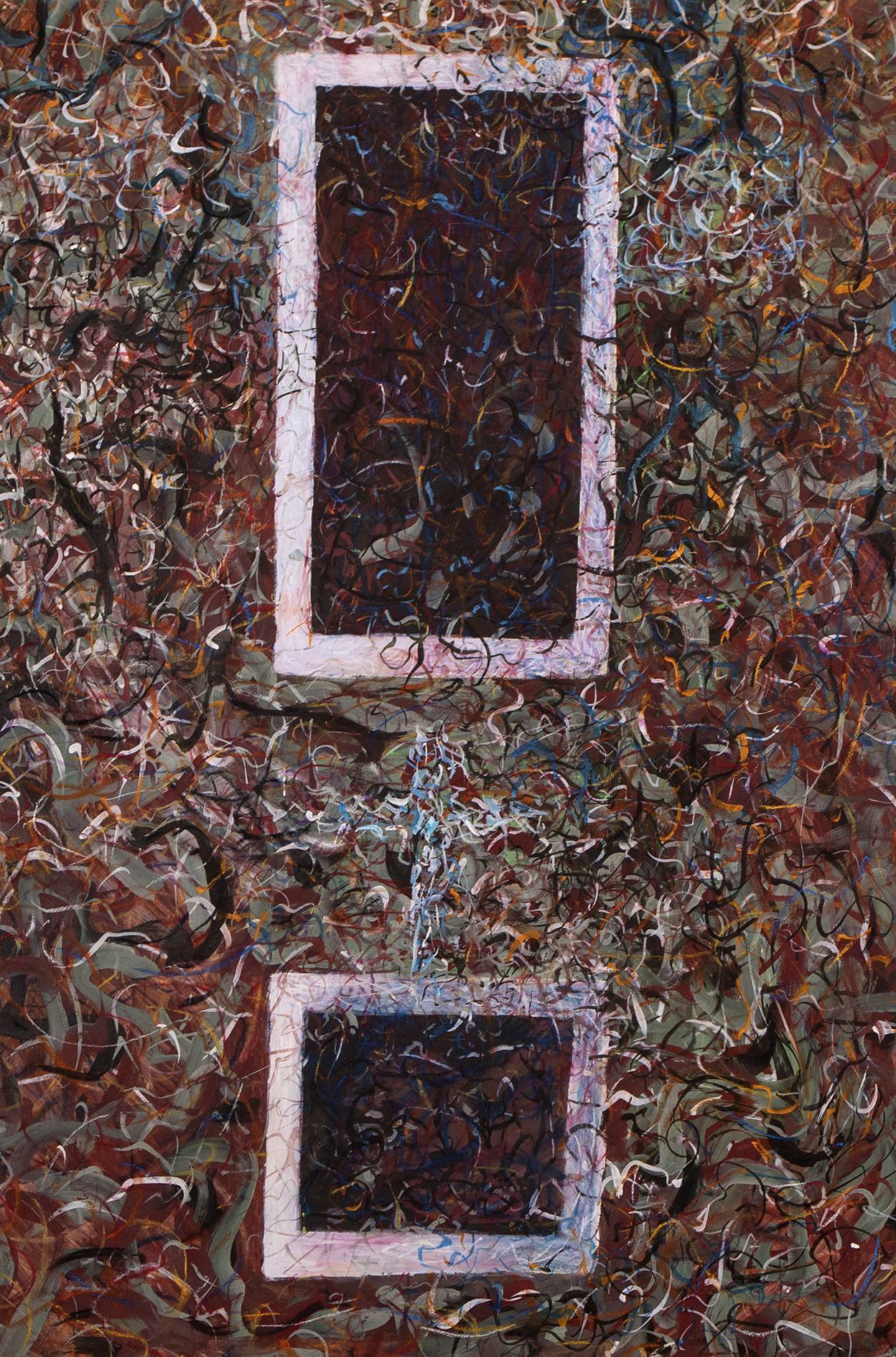
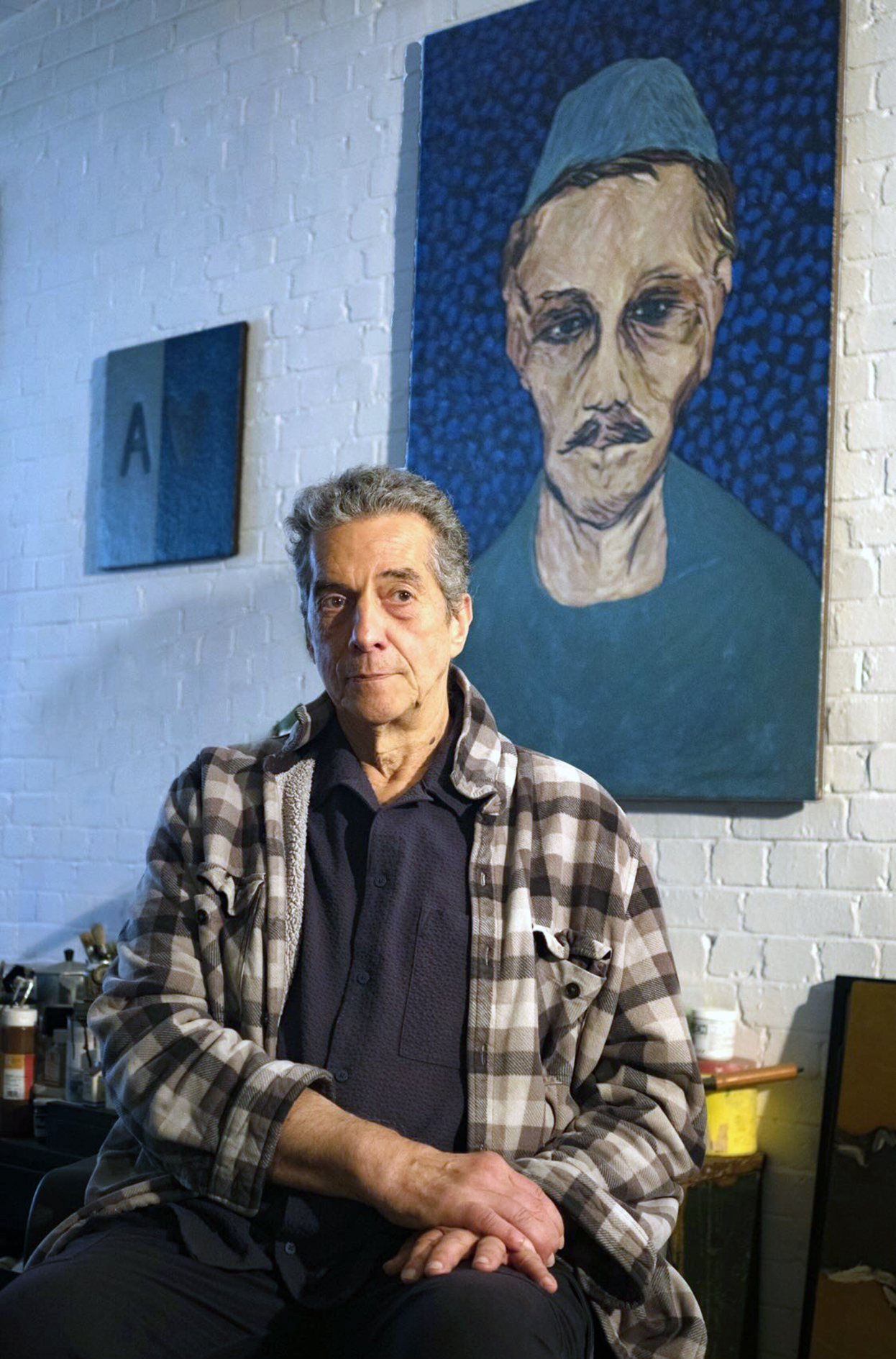
Artist Hervé Constant’s journey to his London studio began in Casablanca, followed by a childhood in a French orphanage, near Hyeres, South of France and theatre studies in Paris. After moving to London to study English Theatre, he found his true calling in the solitude of the studio, where he has practiced for decades.
Q: You were born in Casablanca, trained in theatre at the Conservatoire de Toulon, before moving to L’Ecole Nationale des Arts et Techniques du theatre a la rue Blanche in Paris. Then you became a painter. Why?
A: When I started to paint and draw, I felt that it was really something I had a feeling for. It was because in the theatre or in school you deal with other people. Even if you play you are part of a group and you are still under the director and the other actors. But here in a studio, you feel you open the door, it is your world, you can concentrate and go deeper. I like that much more. In a way, I am quite shy and discrete, so it suits me altogether better. I can stay many hours in a studio or on my canvas for days sometimes when I work, and I do not have any problem about that.
Q: Tell me about your earliest memory with art.
A: I can trace it to when I was in the theatre in Paris. Very often when I was going to rehearse, I was keeping or cutting pages of paintings. One of my favourite artists at the time was the Italian de Chirico. It is a mixture of surrealism where you use space in a landscape, but it is also a bit of constructivism with a kind of nostalgia about the Romans. I liked that very much in my 20s during the early 70s in France. At the school of theatre, we had many invitation cards for the theatre or private views, so I used to go to quite a few galleries already at the time.
Q: When did you know you were an artist?
A: When I was a teenager, I worked as an apprentice in a shop for car maintenance. One of the persons who worked there asked me if I would be interested to join the Conservatoire. That man opened the door to me. I went and started theatre studies. I think that man, Jean Mazza, was the launchpad because he could see I was receptive and interested in music or theatre. At the time, I even did some classes with dance - not because I wanted to be a dancer, but simply to have an idea of how things function and the sensitivity of things. I have always been interested in not just visual art. If you experience other things, it brings a bit more to your work.
Q: Describe a special moment in your studio.
A: One person, who was the director of the New York University in London, and later the London School of Economics, asked me to do a commission of two paintings for the school. His name is David Ruben. He also organised a talk and a projection at the New York University for two short films I made. Then there was the director of the French Institute in London who came to the studio and purchased work. It is a nice experience when you meet someone who thinks, 'I like what you do, I would love to visit your studio.'
Q: You’ve seen Hackney change a great deal over the years. Describe that change and what do you enjoy most about Hackney today?
A: I have been in this space for probably around 20 years now. The area is more secure, but it is now more insipid, it has less character.
Q: Tell me about a favourite project, commission or exhibition and why?
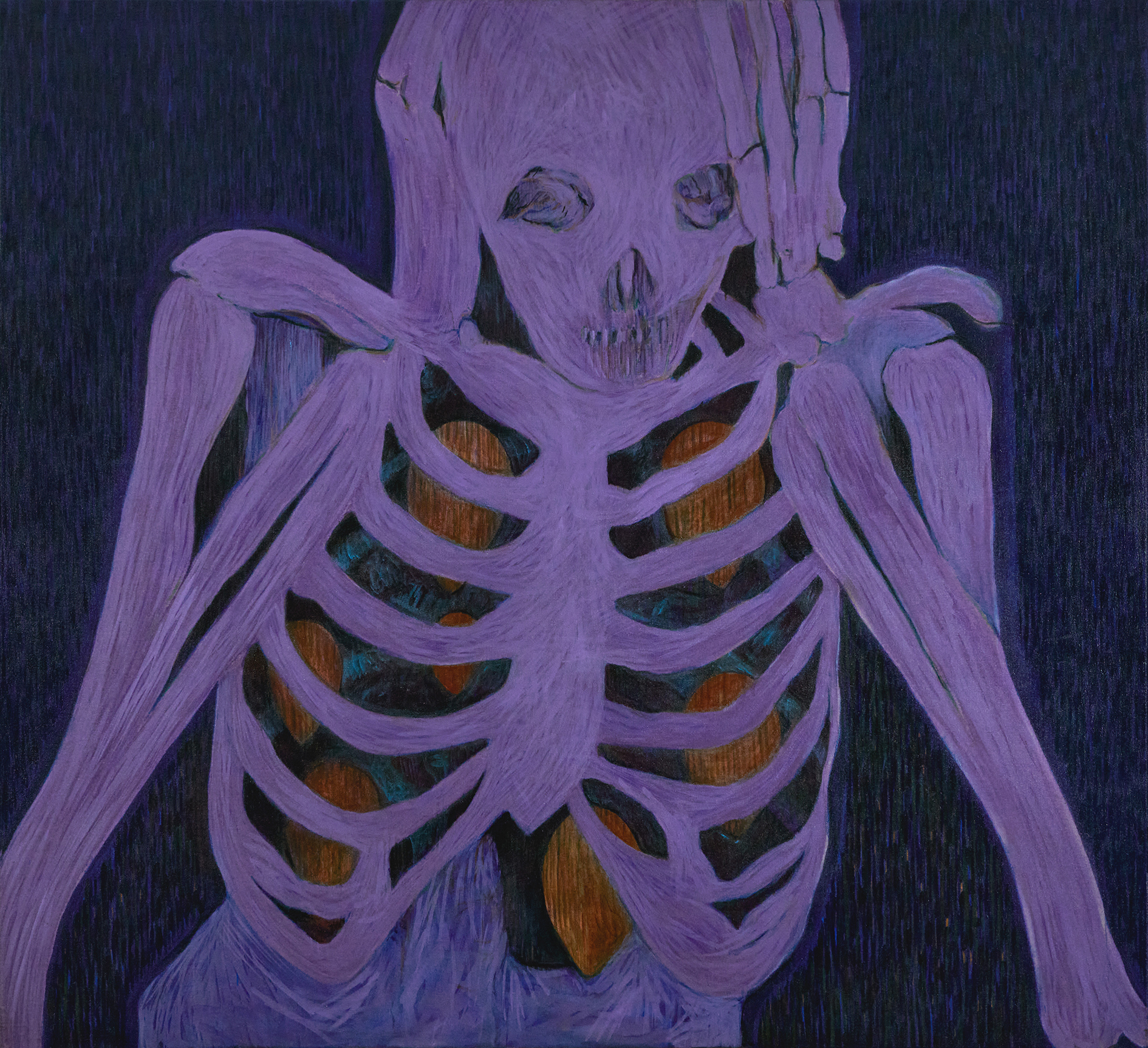
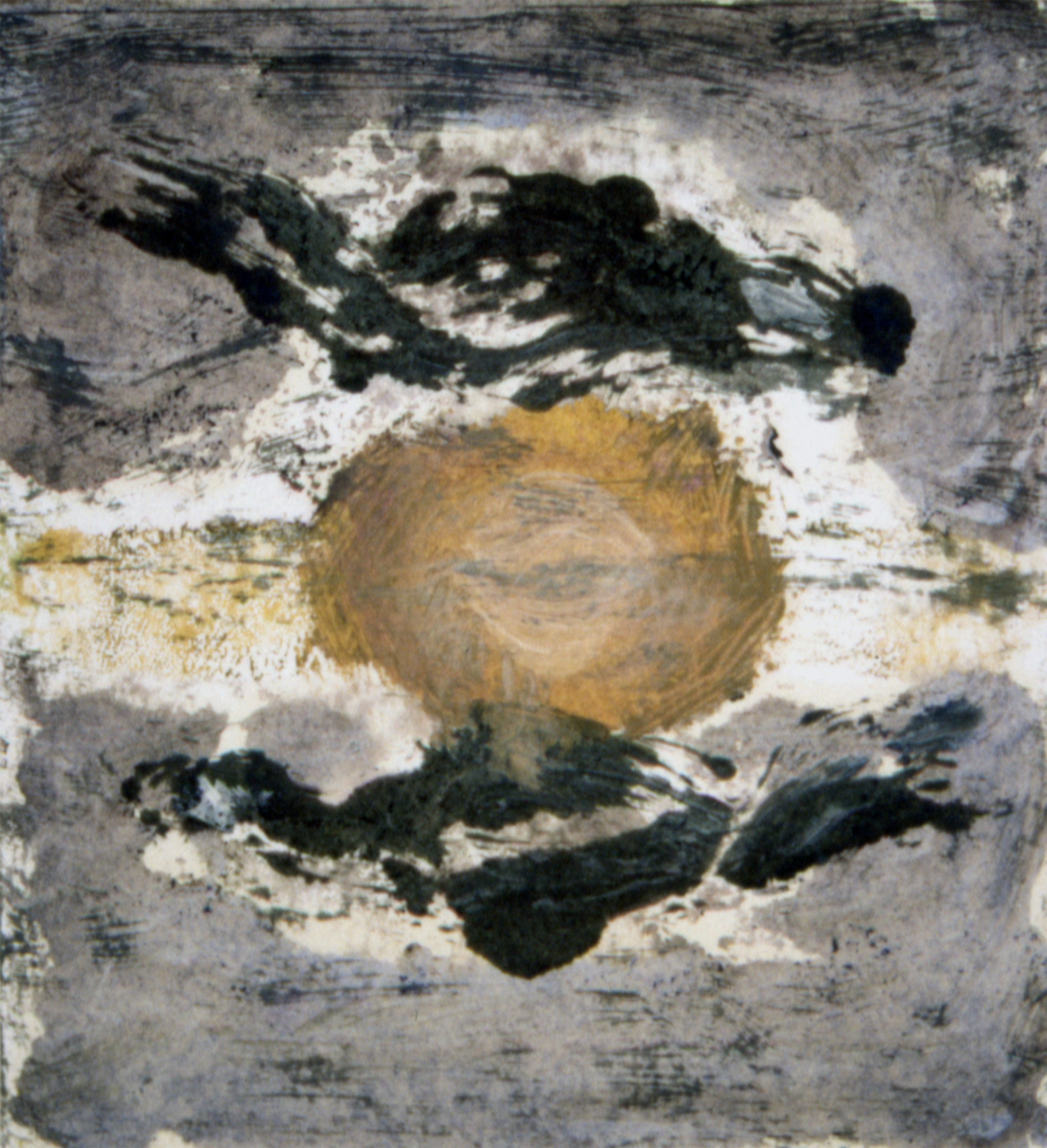
A: I think the tarot project was very interesting. At the time, I was working on a series of paintings about the poet Arthur Rimbaud based on listening to recording of his poems. The director of the Institute Azazel near Carcassonne in the castle based near Pauligne, France approached me and asked if I could be interested in the tarot. Not knowing much I prepared a series of 22 small paintings on the Major Arcana. Then he commissioned me to do two of them in a large scale 2x1m using encaustic paint on panels. There are many connotations between Rimbaud and the tarot. I am interested in Rimbaud’s poetry because I feel a lot of emotion in it. His parents were separated and his father disappeared when he was six, which is a bit like my own story. His poetry sounds like a lot of truth and reflection.
Q: What is success?
A: Success for an artist like me is actually to be able to do it. It is not a question of money, reviews, or interviews. It is having the enough financial means to actually keep doing it - to get the material or pay for your studio. I see many artists who are obsessed with money or setting a lifestyle. Everyone needs a bit of money to pay for things, but it should not be the goal. You need maturity and experience.
Q: Night or day for work?
A: Morning and early afternoon. In the evening, I read or watch a film. I am a great cinephile. I recently saw 'Perfect Days' by Wim Wenders, about a Japanese man who is a cleaner. He does it as a kind of meditation and he is free. It is a very good film.
Q: Why London?
A: When I was a child, in the orphanage since both directors were Americans we could hear a lot said in English and I had an interest to speak it. When I came to London with the drama school, I was very impressed by the acting I saw in British productions. Here I saw a kind of discretion and the ability to act without being 'prepared' to act. I thought I should stay for six months. I started doing part-time jobs and amateur theatre classes, but then I started to draw and paint and I thought, 'this is really what I like to do.' I have stayed ever since.
"Success for an artist like me is actually to be able to do it. It is not a question of money, reviews, or interviews."