Q: First, I’d love to hear about you. Who are you? Where do you come from? Tell me a little bit about family life maybe when you were younger.
A: I was born and raised in New Zealand, in Auckland. I set up Crate with my brother, Tom, and our business partner, Neil. I was raised in a family where my mother was a stay-at-home mum and an incredibly fantastic cook. My dad was an entrepreneur; he set up his own business which designs and developed computer software for hospitals and labs. My mother was very can-do; she would turn her hand to anything. She's still incredibly inspirational for me, an absolute can-do woman who will turn her hand to building a brick wall one day, to baking bread the next day, to learning how to do etchings and pottery. From the entrepreneurial side, Tom and I both learned that there were no limitations in life.
Q: You’re deeply entrepreneurial – tell me about a few things, ventures, projects you’ve created and where the founder/builder energy comes from?
A: I think that is where I feel the most happy. My worst nightmare would just be set in a robotic routine, doing the same thing day in and day out. I love the variety that entrepreneurship gives you. There’s something exciting to pursue and you figure out the path yourself. We did the Counter Cafe first, then Crate, and we’ve done other bits in between. We set up a kombucha brand and we had Mick’s Garage, which we initially took on because we needed warehousing space for our brewery, but we ended up turning it into a nightclub.
Q: You opened Crate in 2012 just as the Olympics landed. How much of Crate's early success was timing and luck?
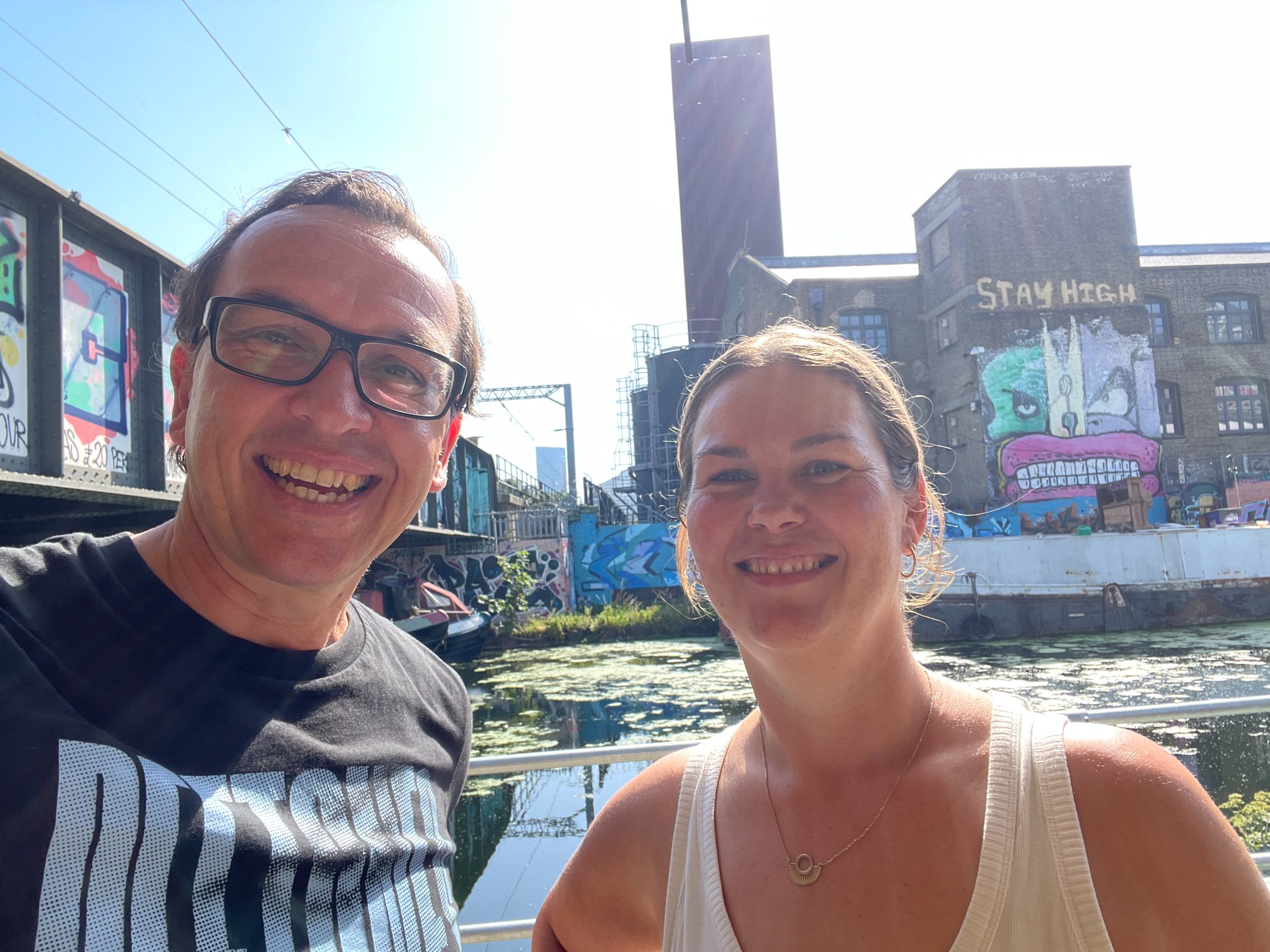
A: It was two weeks before the Olympics. It was great timing in the sense that we luckily got swept up in lots of positive press, but in terms of infrastructure and access, Hackney Wick was definitely stitched up. They had built all these bridges and then at the last minute everyone was funneled through Stratford. It was terribly communicated. But we had been in the area a long time; we moved into a warehouse here in 2008 when there was literally nothing. As soon as we opened the cafe, all these artists started coming out of the woodwork who didn't even know each other existed because there was no space for them to connect. Seeing that journey of discovery has been wonderful.
"I love the variety that entrepreneurship gives you. There’s something exciting to pursue and you figure out the path yourself."
Q: Wood Wharf is in corporate Canary Wharf, a world away from the Wick's artist-warehouse scene. What does that location mean to you?
A: It was a big one for us because you couldn't get more polar opposite to Hackney Wick if you tried. We wanted to see how we could expand the Crate idea. It was a proof of concept in our own minds: how much of it is about the location versus the energy you bring to a space. Canary Wharf is trying to metamorphosise into something new, moving away from being known only as a business district to creating a residential community. Regeneration areas are really interesting for us.
Q: Three founders, two of you siblings, 14 years in. How has your sibling relationship evolved? Who does what?
A: We are very different people, but he knows me better than anybody else. We have clear roles. He is an absolute visionary; he’s got this energy and can see things in a way that other people can’t, and he is **not** risk-averse. I’m much more, 'Okay, cool idea, how do we make that realistic?' We’re definitely yin and yang. We actually bought a house together 10 years ago because neither of us could afford to buy in London otherwise. It works because you can fight it out and then move on with no hard feelings.
Q: Tell me about the decision to partner with Notpla, which is also a Hackney Wick-based brand.
A: We became a bit of a testing ground for them because we are very interested in environmental sustainability. We had the restaurant upstairs, Silo, which is a zero-waste restaurant, so we were exploring ways to reduce waste and change how we integrate that into our business. When Notpla moved in, we got talking about disposables, and they ended up making our seaweed pizza boards. They would often come over and share prototypes of seaweed spoons or other things with our customers.
"We set up a kombucha brand and we had Mick’s Garage, which we initially took on because we needed warehousing space for our brewery, but we ended up turning it into a nightclub."
Q: What do you think makes Crate uniquely special in Hackney Wick? What are the New Zealand/Kiwi characteristics that customers might miss?
A: There is a real Kiwi attitude of using things that you have. People back home turn their hand to anything because you don't always have the resources or access to stuff. When we set this place up, we had no budget; we were doing it on an absolute shoestring. All of our furniture was built out of things we found on the side of the road, like reclaimed pallets or bed springs for our lights. That ingenuity of thinking outside the box and making something happen without money is very Kiwi.
Q: Looking at Crate at 20 years old – are there more locations, staying small, expanding into other services?
A: We’re not looking to make moves at the moment. We need to let Wood Wharf settle and flourish. Couple that with the current economic climate, I think it would be a bit silly to try anything new right now. We’re likely to just sit tight and keep things going for the next year or two. Everything we’ve done has always been at the beginning or middle of a recession, and sometimes the best things come out of times of hardship, but for now, we’ll see.
Q: What do you love about Hackney Wick and London?
A: There’s a sense of freedom in Hackney Wick. You can be who you want, dress how you want, and do what you want. There’s a frequency in cities like this - it’s the same in Berlin or Portland - where there’s a buzz but it’s also super chill. I’ve lived in London more than half my life now, and this is definitely where I call home.